


Dental Amalgam Recycling: What UK Practices Are Leaving on the Table
April 28, 2026Every UK dental practice owner already knows the regulatory shape of the dental amalgam question. The EU banned new amalgam from 1 January 2025, the UK stayed on its phase-down rather than following, the global Minamata phase-out lands in 2034, your separator captures 95% or better, and your hazardous waste consignment notes get filed for three years. None of that is news. What is news, or should be, is how much money is walking out the door of most practices in a sealed canister marked “for disposal.”
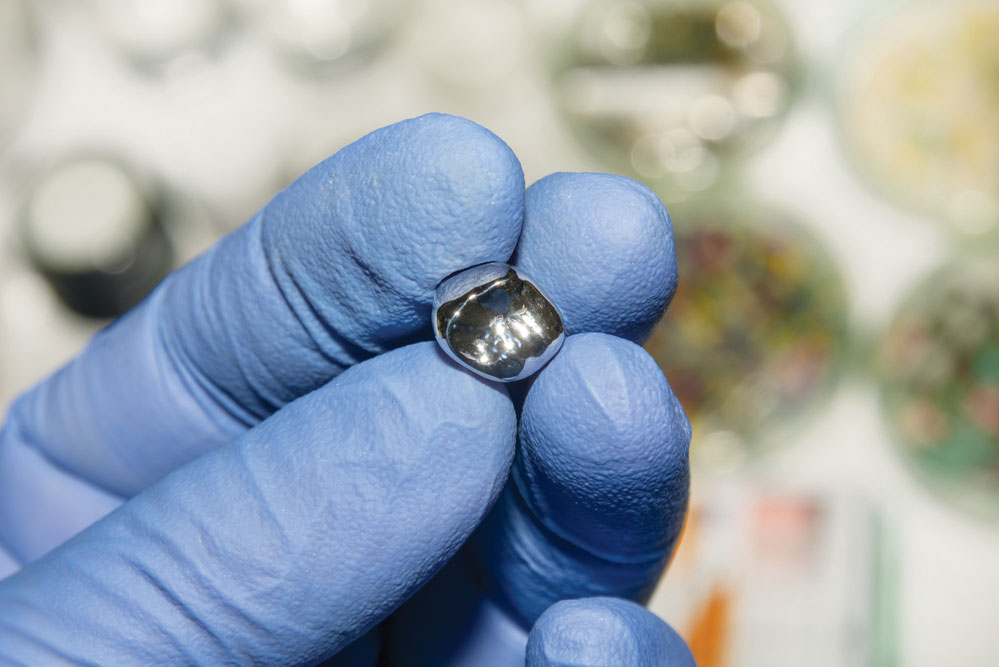
Dental amalgam recycling is genuinely under-discussed in UK practice circles, and the reason is structural. The companies that collect amalgam waste are mostly clinical waste contractors. Their job is compliant disposal, and they’re priced and incentivised accordingly. They charge you to take it away, send the mercury for stabilisation, and the residual silver-bearing material gets onward-sold to a refiner somewhere down the chain. Whoever ends up with that material captures the precious metal value, and it isn’t you. If your current arrangement involves paying for collection and never seeing a settlement figure, dental amalgam recycling is something worth thinking about properly.
The numbers are worth knowing. Amalgam alloy is roughly 50% mercury, but it’s also 22 to 32% silver, with smaller amounts of tin, copper and zinc. Silver is currently sitting at multi-decade highs, and the silver content alone makes amalgam waste one of the most valuable waste streams a small business produces. Most practice managers have no sense of this because the conversation has always been framed as a compliance cost rather than a recoverable asset.
What changes the conversation is dealing directly with a precious metal refiner rather than a waste contractor. A refiner’s commercial interest is recovery. They want the silver content to come out cleanly, accurately assayed, and paid for at a rate that reflects the spot market. Most UK refiners offering dental amalgam recycling will work in one of two ways: outright purchase, where they weigh and assay your material, deduct a refining charge, and pay you the balance against current spot; or toll refining, where you retain ownership of the metal through the process, pay a fee against the recovered weight, and either take payment at a price you fix or hold the metal. Outright purchase suits smaller surgeries with occasional collections. Toll refining tends to make more sense for larger practices and dental groups producing steady volumes, because the per-gram economics improve with larger lots and you have more control over when you sell against silver price movements.
A few things to ask before you commit to anyone. First, find out whether they’re an actual refiner or a waste contractor reselling the work to one. The difference matters because every middleman in the chain takes a margin out of your settlement. Second, check that they’re registered with the Environment Agency for hazardous waste, and ask for the licence number. Mercury-bearing waste needs a licensed handler, and a proper refiner will have the registration ready before you ask. Third, find out how they assay. A reputable operator will weigh your material on receipt, melt and homogenise it under your authority for toll refining, and produce a written breakdown of metal content before any payment. If the offer is a flat per-kilogram rate sight unseen, you’re being underpaid. Fourth, confirm whether collection is included. AWA, for instance, runs a national fleet and arranges collection for high-value loads, but every refiner sets a different threshold for free pickup versus chargeable.
The single biggest mistake practices make is mixing their waste streams. Amalgam recycling pays differently for different inputs because the silver concentration differs across them. Separator canisters are typically the lowest-grade material because they’re diluted with water and sediment. Contact amalgam, the unset stuff from capsules and trays, is high-grade because it’s almost pure alloy. Non-contact amalgam, the excess scraped before placement, is also high-grade. Chair-side trap contents sit somewhere in between. Extracted teeth carrying amalgam restorations are their own category and surprisingly valuable, because the metal is concentrated and easy to recover. Tipping all of this into one container produces a single low-grade rate for the lot and costs you the premium on the high-grade material.
Extracted teeth deserve a particular note. Most practices treat them as clinical waste and pay to incinerate them. That destroys any silver in any restorations the teeth carried. Even a modest filling carries a couple of hundred milligrams of silver (this varies considerably with filling size and alloy formula), and a busy practice doing routine extractions on older patients accumulates them quickly. Storing extracted-teeth-with-amalgam separately and sending them to a refiner rather than to incineration is one of the simpler operational changes a practice can make, and it costs nothing beyond a labelled container.
There’s also a paperwork point worth being clear on. A refiner handling dental amalgam waste should provide you with two documents per collection: a hazardous waste consignment note for your three-year file, and a separate certificate of destruction confirming the mercury has been stabilised through licensed routes. The settlement statement for the recovered silver and other metals comes after assay and is a third, distinct document. If your current contractor only produces the consignment note, you’re getting the compliance paperwork and nothing else.
Looking forward, the case for treating amalgam waste as a recoverable asset only strengthens. The 2034 global phase-out and the UK phase-down both mean less new amalgam entering the system every year, but the back-catalogue of fillings already in patients’ mouths will keep coming out for two or three decades. Every practice will be generating amalgam waste well into the 2040s. Silver has roughly doubled in five years and the supply outlook for silver is tighter than the gold outlook because most silver comes out of the ground as a by-product of base-metal mining rather than as primary production. The same canister that returned a modest settlement in 2020 returns considerably more today, and the trend lines support that continuing.
Compliance is settled territory for any practice that’s been running properly since 2018, and most owners reading this will already have it watertight. The recovery side, where dental amalgam recycling actually pays you back rather than just costing you, is the part most practices haven’t looked at in years and the part worth looking at now.


 This entry was posted in News and Information. Bookmark the permalink.
← The Tech Boom’s Hidden Treasure
This entry was posted in News and Information. Bookmark the permalink.
← The Tech Boom’s Hidden Treasure